Quantum fields from quantum cellular automata: locality, interactions, and positive energy
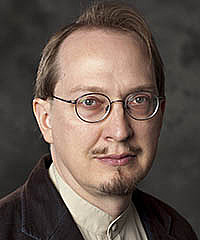
Todd Andrew Brun, University of Southern California
Quantum cellular automata (QCAs) can be thought of as second-quantized versions of quantum walks on a lattice: local subsystems evolve unitarily while interacting with their neighbors. In the long-wavelength limit their solutions approach those of free quantum field theories, and can describe both bosons and fermions. QCAs with time-reversal symmetry will exhibit both positive and negative energy solutions, which are not distinguishable from each other in a finite region. This implies that a localized interaction between two QCAs will generally allow negative-energy solutions of the free theories to be excited, even if the initial state includes only positive-energy components, possibly leading to a cascade of particle pair creation. This coupling to negative-energy states cannot be eliminated for interactions with finite range; however, increasing the range of the interaction can make it possible to suppress this coupling exponentially, to the point where it is effectively zero. We show this in a model of a 1D fermionic QCA coupled to a 1D bosonic QCA, and discuss the implications for higher dimensions. (This work was done in collaboration with Leonard Mlodinow.)
Date
- Feb 24 2026
- Expired!
Time
- 1:30 pm - 2:30 pm
Location
Other Locations
Organizer
-
Xiaojun Yao
-
Email
xjyao@uw.edu
Other Organizers
-
Sebastian Grieninger
-
Email
segrie@uw.edu